Objects of Desire
Fifteen point nine kilometres to Sweden: the bridge, the boats and the yellow bus
The Øresund Bridge in figures, an electric harbour bus, self-drive boats and why the bicycle wins.

Photo Credit
Image courtesy of © Nick-D · CC BY-SA 4.0 via Wikimedia CommonsIn a city where half the commuters pedal, what counts as a great drive? The answer runs under the sea and over it: the Øresund link to Sweden, 15.9 km of tunnel, island and bridge. Closer to home, the beautiful machines float: an electric harbour bus on an ordinary ticket and boats you skipper yourself, with a picnic table where the dashboard should be. Checked against the operators’ own pages in November 2026.
A bridge that begins as a tunnel
Why would a city of bicycles give its motoring feature to a bridge? Because the most beautiful machine within reach of Copenhagen is the road to Sweden. The Øresund Bridge carries the motorway and the railway from Copenhagen to Malmö, and Øresundsbron, which runs it, describes a link of 15.9 km: about 8 km of bridge, 4 km of tunnel and a 4 km artificial island in between.
Its own figures are precise: 7,845 metres of bridge, 4,050 metres of tunnel and Peberholm, the man-made island, 4,055 metres long. The pylons rise to 203.5 metres. It was built between 1995 and 1999, cost 30.1 billion DKK at 2000 prices and has been open since 1 July 2000. From the Danish side the road goes under the sea first, so the bridge arrives as a reveal: the Øresund keeps its best view for the second act.
Øresundsbron sells crossings online, along with its ØresundGO subscription for people who make the trip often. Book on its own website rather than at the barrier, and keep your passport or identity card with you: you are driving into another country, however short the journey feels.
The yellow bus that floats
Back in town, the most useful machine is yellow and floats. The harbour buses run the length of the harbour as routes 991 and 992, from Sluseholmen in the south to Orientkaj in the north, on an ordinary bus ticket. Since summer 2020 they have run on electricity, each carrying up to 80 people, 8 bikes and four prams or wheelchairs. It is the cheapest harbour cruise in Scandinavia that nobody has thought to advertise as one.
Under the streets runs a machine with no driver at all. The Metro is driverless on all four of its lines: M1 from Vanløse to Vestamager, M2 from Vanløse to the airport, M3 the City Circle and M4 from Orientkaj to København Syd. The M2 reaches Nørreport from the airport in around 15 minutes and runs every 4–6 minutes by day, which leaves the hire car looking rather sorry for itself.
Captain for an afternoon
GoBoat has rented boats from Islands Brygge since 2014: Danish-designed electric boats that sail at a relaxed pace, with a picnic table in the middle. No boating licence is needed to take the wheel of a GoBoat Classic, which fits eight; bring your own food and drinks or order from GoBoat. It is the only vehicle in Copenhagen where the dashboard doubles as a cheese board.

Photo Credit
Image courtesy of © European Commission · CC BY 4.0 via Wikimedia CommonsFor those who would rather be driven, the classic canal tour takes an hour from Nyhavn or Ved Stranden, guided in Danish and English, with adult tickets from 199 DKK; VisitCopenhagen notes that the Copenhagen Card covers it only from Ved Stranden.
From the Danish side the road goes under the sea first, so the bridge arrives as a reveal.
The machine without an engine
And the bicycle? Here it is less a hobby than the climate. Cycling accounts for 49% of trips to work or school in Copenhagen, more than 40,000 people cross Dronning Louises Bro by bike on a workday, and bicycle signals often turn green a couple of seconds before the cars’. The city’s most admired vehicle, in other words, has pedals.
The engineering is in the details. Set-back stop lines put cyclists five metres ahead of drivers at junctions, and at some red lights a railing lets riders stay seated and push off when the light turns green, like sprinters from the blocks. Three quarters of the people who cycle keep going through winter, which says something about the bikes and more about the riders.
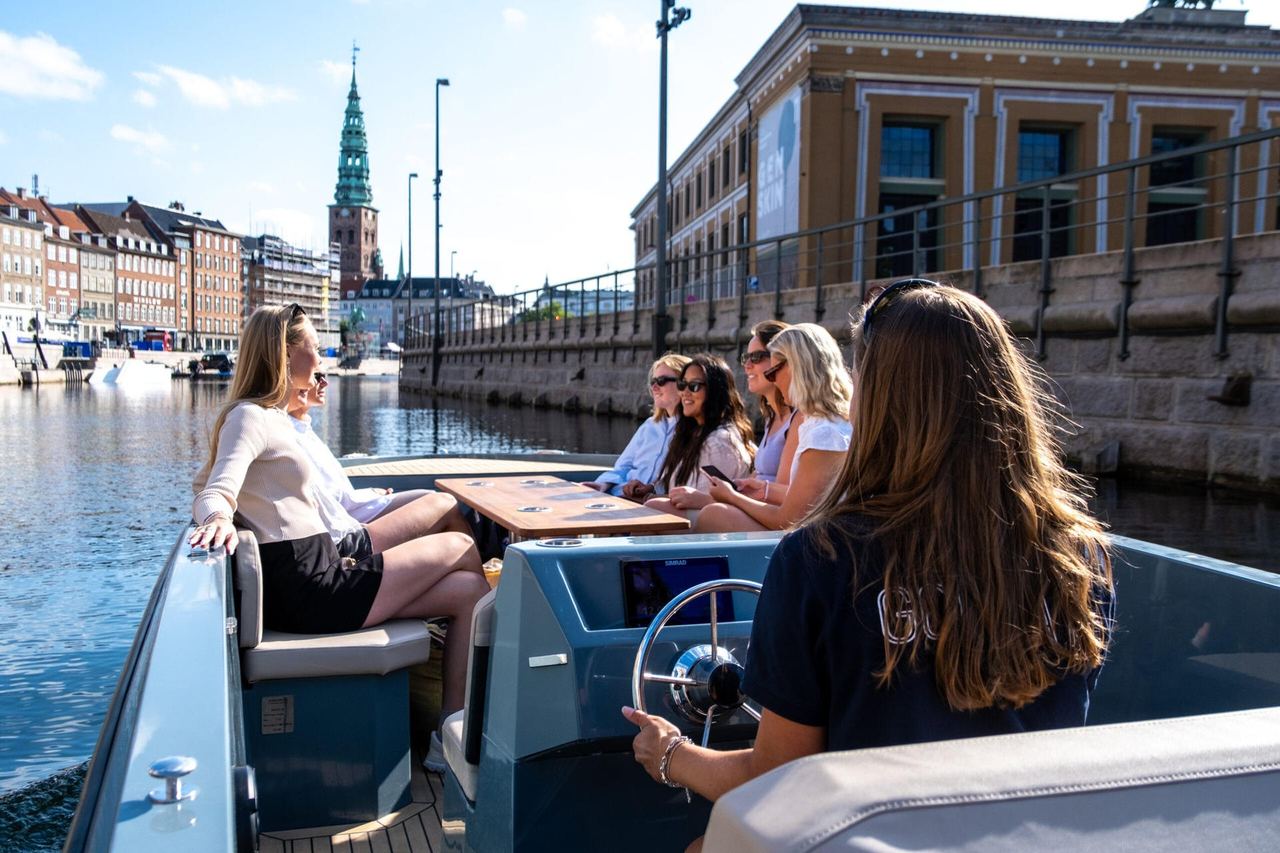
Photo Credit
Image courtesy of © GoBoatOur advice: cross the Øresund in daylight, when the pylons earn their toll; ride the harbour bus back into town on an ordinary ticket; and keep GoBoat for a still day, when the picnic table is the best seat on the water.
Why it's on our list
- A bridge that begins as a tunnel
- The yellow bus that floats
- Captain for an afternoon
Location
The map comes from Google Maps, which sets its own cookies once it loads.
More in depth
 Objects of DesireMunch’s sky, a gold-leaf ceiling and a hall for 1,800Nouvel and Toyota’s four halls, the Opera’s 105,000 sheets of gold leaf and the jazz in between.
 Objects of DesireA star castle, three cinemas and a studio from 1906Europe’s oldest working observatory building, cinemas named for Dreyer and Asta Nielsen, and Valby.
 Objects of DesireFour dragons, a ski slope and a museum for 2027: how Copenhagen buildsBørsen rebuilt exactly, a ski slope on a power plant, Nordhavn and a museum opening in March 2027.