The back story
Three waves, one silversmith and a shop called BO: Copenhagen shopping, the back story
Porcelain from 1775, silver from 1904, a store called BO and HAY up a staircase on Strøget.

Photo Credit
Image courtesy of © Cristian Ungureanu · CC0 via Wikimedia CommonsCopenhagen’s shopping has a centre of gravity: Amagertorv, halfway along Strøget, where Royal Copenhagen, Georg Jensen and Illums Bolighus have kept shop for generations within sight of ILLUM. Here is how a porcelain factory of 1775, a silversmith of 1904 and a store called BO turned one square into a showroom for Danish design, and how to shop it, checked against the houses’ own pages in November 2026.
The square that sells a philosophy
Why do Danish design’s oldest names crowd onto one square? Amagertorv sits midway along Strøget, and on it stand the porcelain maker of 1775, the silversmith of 1904 and the design store that began in 1925, with ILLUM on the corner. Together they make a working showroom for a national argument: that the useful things in a home deserve as much thought as the precious ones.
Pattern No. 1
The Danish Porcelain Manufactury was founded in 1775 by the apothecary Frantz Henrich Müller, under the patronage of the Dowager Queen Juliane Marie. Its first pattern, Blue Fluted Plain, is still Pattern No. 1, and the three wavy lines of the factory mark are read as the Sound, the Great Belt and the Little Belt: a trademark that doubles as a map of Danish waters.
The pattern kept growing. In 1889 Arnold Krog, who admired a full lace dessert plate from the factory’s early days, turned Blue Fluted Full Lace into a whole dinner service and added Blue Fluted Half Lace. Through the 1900s the factory worked with artists including Axel Salto, Gertrud Vasegaard and Grethe Meyer, which is why a Royal Copenhagen table can span two centuries without a clash.
Since 1911 the Royal Copenhagen Flagship Store has stood at Amagertorv 6, in a Renaissance building from 1616; the porcelain moved in 295 years after the bricks. For the factory’s 225th anniversary in 2000, a young design student reinterpreted the old pattern as Blue Fluted Mega, now a classic of its own, and in 2025 the house marked 250 years.
Silver, then everything
Georg Jensen was 37, trained as a goldsmith and a sculptor, when he set up his silversmithy in central Copenhagen in 1904, beginning with small pieces of silver jewellery. After an exhibition that autumn his designs became favourites of the city’s high society, and by 1917 he had built a workshop large enough for hundreds of employees. The house now makes silverware, jewellery, home pieces and watches.
A shop called BO
Illums Bolighus began in 1925, when the businessman Kaj Dessau founded a store called BO and, with the artistic consultant Brita Drewsen, showed furniture, textiles, art and accessories as complete interiors, unusual for its time.
The three wavy lines of the factory mark are read as the Sound, the Great Belt and the Little Belt: a trademark that doubles as a map of Danish waters.
In 1941 the Illum, Berg and Trock-Jansen families bought it and gave it its present name; in 1961 the architect Kay Kørbing designed its building and façade on Amagertorv, and its windows have been dressed for passers-by ever since. A third floor followed in 1972, and 2026 marks 85 years under the Illums Bolighus name.
ILLUM, founded in 1891 by A.C. Illum, stands where Strøget meets Købmagergade, with the ILLUM UNDERGROUND food market below and a rooftop above. Magasin du Nord, which dates its history to 1868, answers from Kongens Nytorv with five floors and a food market of its own. Copenhagen keeps its department stores in pairs, as if to settle arguments.
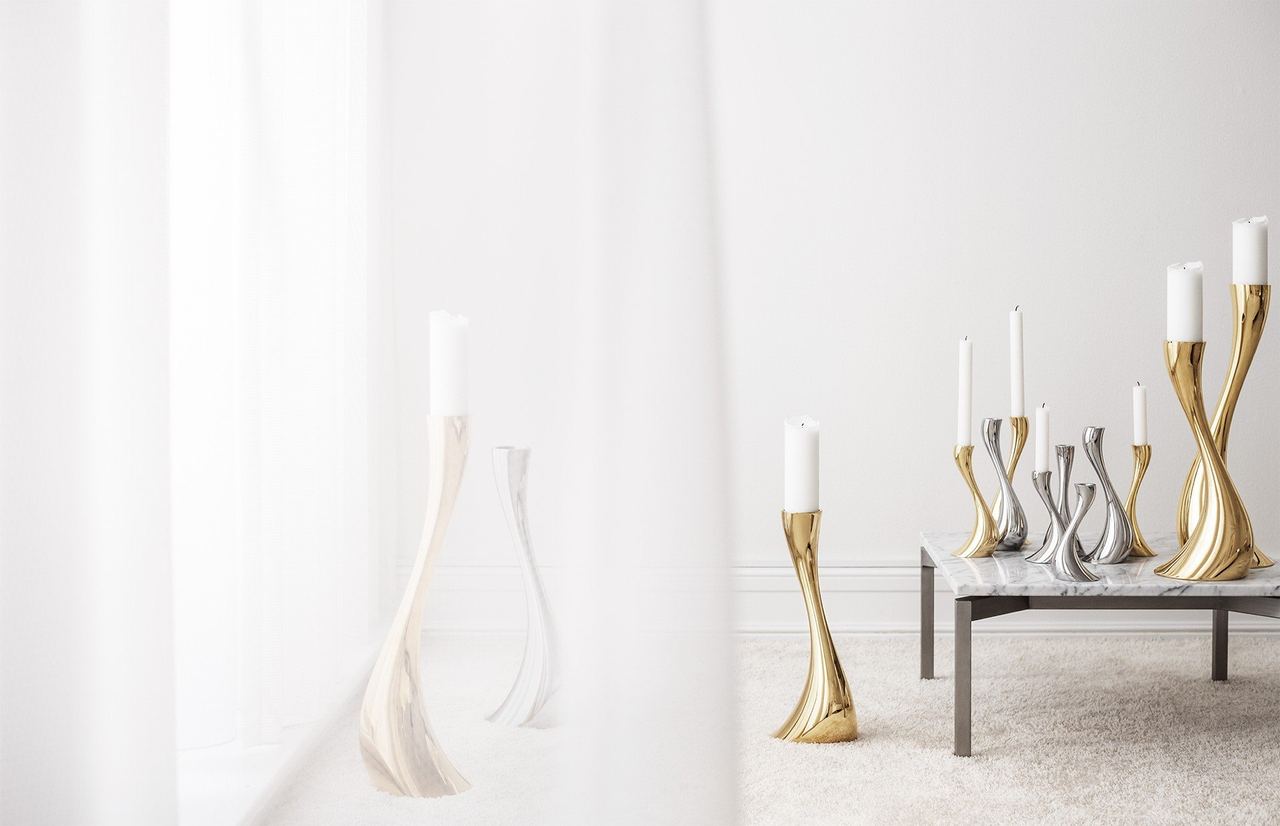
Photo Credit
Image courtesy of © Georg JensenThe new guard, upstairs
HAY was founded in 2002 by Mette and Rolf Hay to make well-designed furniture and accessories at prices within reach of the ordinary home owner, and its creative headquarters remain in Copenhagen. HAY House sits on the second floor of Østergade 61, above Strøget: a design shop up a staircase, the city’s quiet joke on the window-shopper.
Strøget itself sorts the city’s money as you walk it, from the chains near City Hall Square to Prada, Hermès and Gucci at the Kongens Nytorv end. The design houses sit in the middle, which is where Danish design has always preferred to be.
Our advice: walk Strøget from City Hall Square so that the shops improve as you go; give Amagertorv an hour on its own; climb to HAY House before your feet give out; and end at ILLUM Rooftop, where the view of Christiansborg is the one thing in the building that is not for sale.
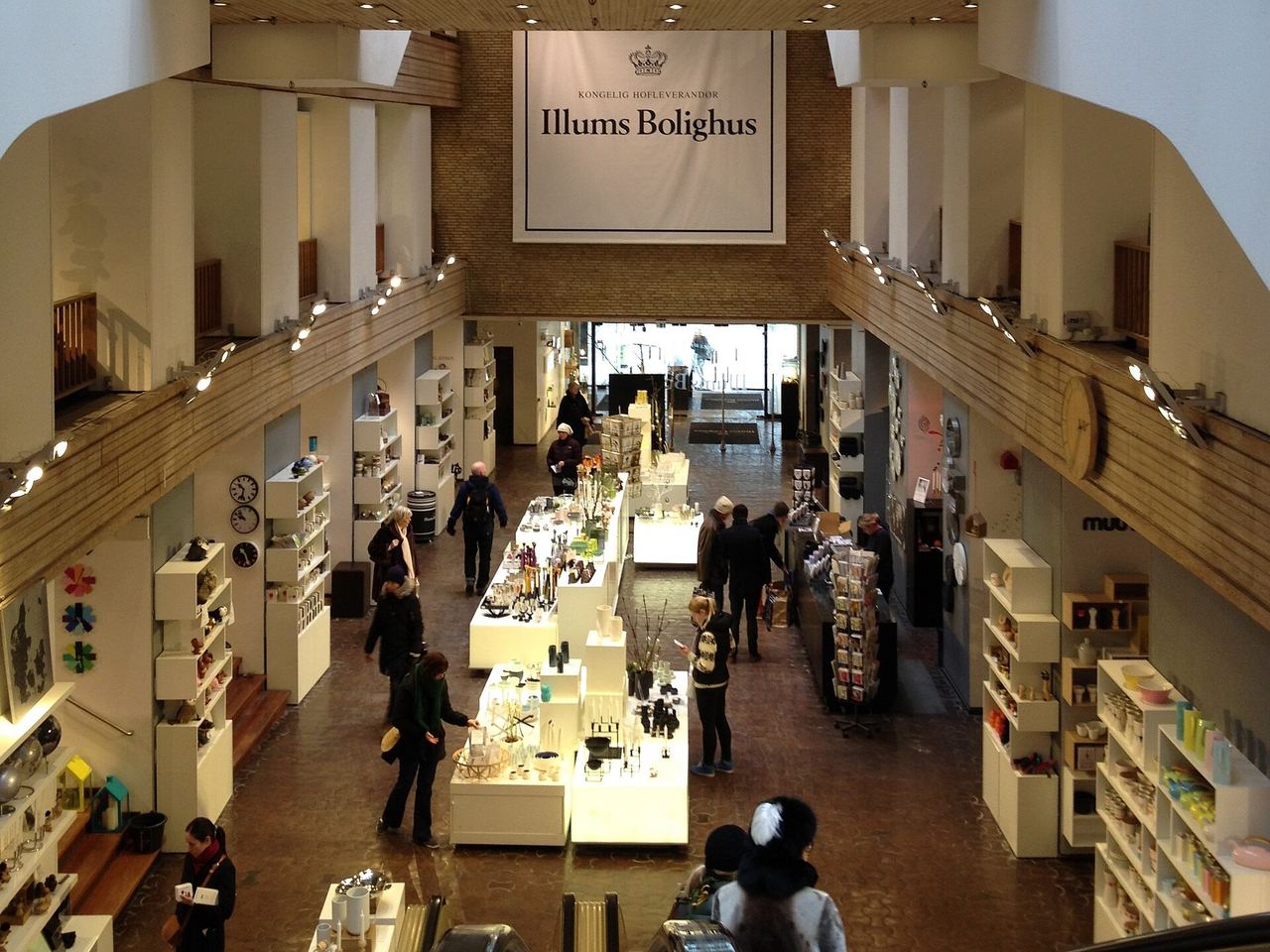
Photo Credit
Image courtesy of © Gryffindor · CC BY-SA 3.0 via Wikimedia CommonsWhy it's on our list
- The square that sells a philosophy
- Pattern No. 1
- A shop called BO
- The new guard, upstairs
Location
The map comes from Google Maps, which sets its own cookies once it loads.
More in depth
 The back storyFrederiksstaden flats, Hellerup villas and the new harbour: buying in CopenhagenWhere people buy, and how a purchase works in Denmark.
 The back storyCopenhagen by Metro, train and bike: the M2, the S-tog and the harbour busesMetro, trains to Malmö, harbour buses and city bikes.
 Coming soonComing soon: the tech the makers have promisedOfficially announced tech, from Gemini glasses to Meta's VR specs, plus the newest arrivals.